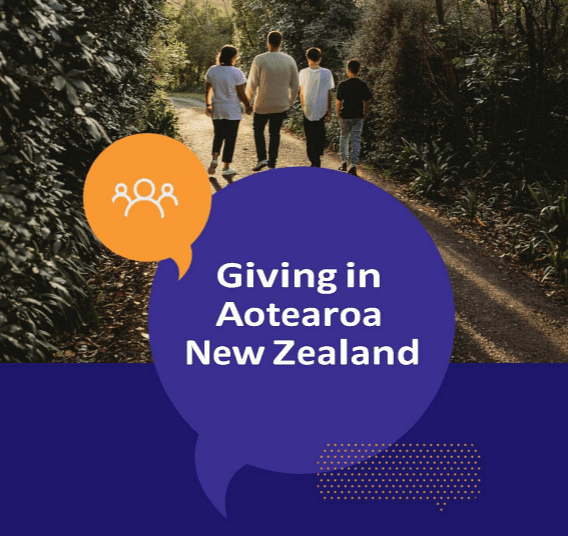
New BERL research looks at how people in Aotearoa New Zealand give – through donations, koha, faith, whānau and community.
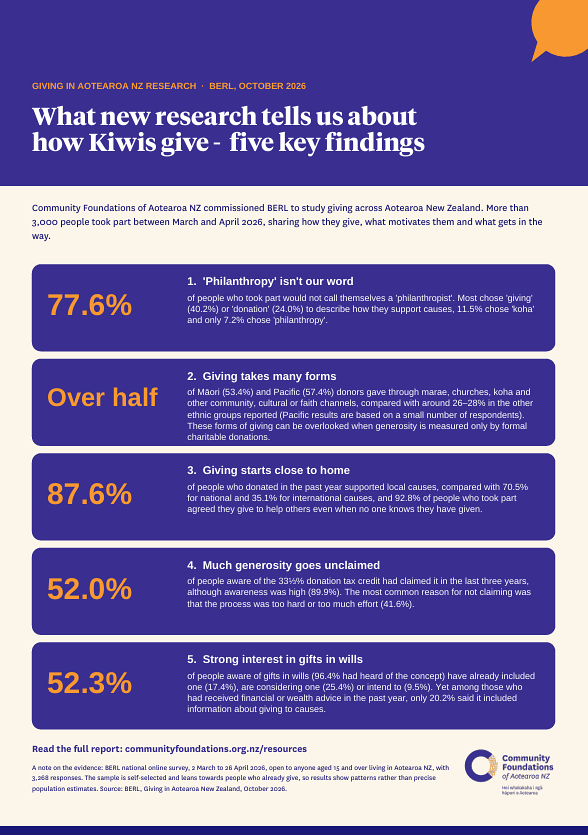
More than three-quarters of respondents (77.6%) would not call themselves a philanthropist, and only 7.2% chose ‘philanthropy’ as the word that best describes how they support the causes they care about, according to the Giving in Aotearoa New Zealand research released today by Community Foundations of Aotearoa New Zealand (CFANZ).
“People in this country are generous and they love to give locally, but most of us are pretty humble when it comes to describing that generosity” says CFANZ Chief Executive Eleanor Cater. “People told us they give, they donate, they offer koha, and they show up for their whānau and their communities and very few call it philanthropy - including those on higher incomes. The language our sector often uses to encourage giving doesn’t always reflect how most people describe their own generosity.”
"We regularly see the generosity of people across the Eastern Bay of Plenty, with many choosing to support their communities in different ways. The research highlighted two key findings for me: New Zealanders value giving locally, and a significant number are considering leaving a gift to their community in their will" says Eastern Bay Community Foundation Manager Angela Jackson.
Other key findings include that giving is different across cultures with more than half of Māori and Pacific people giving through cultural or faith channels, New Zealanders also tend to support local causes (87.6%) and only half are claiming their donation credit through the Inland Revenue Department.
The Giving in Aotearoa New Zealand research, prepared by independent researchers BERL (Business and Economic Research Limited), draws on responses from more than 3,000 people aged 15 and over to a nationwide survey run in March and April 2026. Rather than measuring generosity by dollars alone, it looks at the full range of ways people give, including volunteering, koha, marae-based support, faith-based giving and helping others directly. It finds that giving is local, relational and values-driven, and that informal and formal giving – from helping others and volunteering to donating and gifts in wills – are connected rather than separate.
“This research tells us generosity isn’t in short supply in Aotearoa,” says Ms Cater. “Where people don’t give, or don’t give in a particular way, it’s mostly about capacity, time and life stage rather than unwillingness. That points to practical changes: making it easier for people to claim the tax credit; encouraging advisers to raise giving when people plan their finances and their wills, since more than half of the people we heard from are already open to the idea of leaving a gift in their will; and approaches that respect the different traditions of giving across our communities, from koha and marae to faith-based giving.”
“Giving here is local and relational. People want to see the difference their generosity makes close to home. Community foundations across the country exist to help people do exactly that, whether through a regular gift, an invested fund or a gift in their will”.
"These research findings confirm what we see in our conversations across the Eastern Bay of Plenty" says Manager, Angela Jackson.
The full Giving in Aotearoa New Zealand research report is available here with a synopsis of the five key findings here.